
I have been hesitant to post about AI because it is evolving so quickly that anything I write may quickly become dated.
Instead, I want to recap a theme in a recent Small Agency Growth Alliance podcast that tied together the interconnections among conventional and AI searches, owned content, and the role of your website as a content hub. Podcast hosts Chip Griffin and Gini Deitrich presented a strong and understandable pathway for organizations that may need to modernize their processes to essentially be found by their audiences.
Gini Dietrich is the creator of the PESO model (paid, earned, shared and owned), which helps organizations comprehend how to effectively market and communicate across integrated platforms. She and Chip, a former agency owner and highly regarded consultant, do a great job exploring and boiling down complex marketing issues. With a recent significant revamp of the PESO model to better integrate AI and large language modules (LLMs), they discussed “visibility engineering,” which is when owned and earned media are influencing what LLMs track and use to determine what may get included in AI-generated answers.
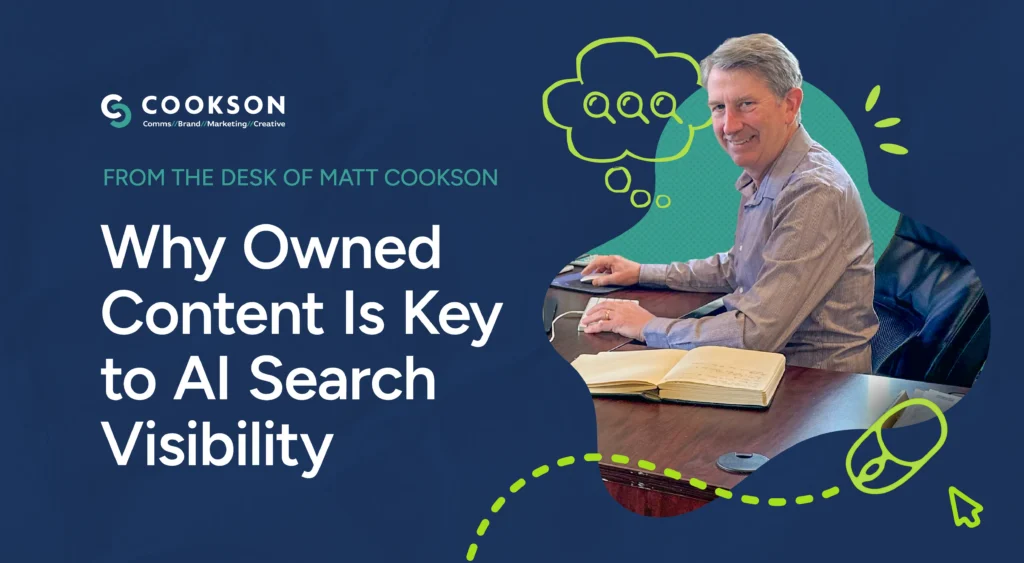
The critical point to me, as an agency owner who focuses on content creation and visibility, is how critical owned content is. This includes blogs, press releases, substantive social media posts, and other content your organization generates to help tell your story. And it needs a primary home, which most likely is your website. This “own it first and earn it second” approach is fundamental. And LLMs can verify information about your organization by comparing what is said through the sources and information they track to what is on your website.
We mainly use three primary methods to find information: sources we know and trust; a conventional Internet search through Google or a similar tool; and/or an AI-enhanced search tool to probe deeper by asking multi-layered questions with prompts. Organizations that want to be found and seen today need to plan for all three. This means understanding SEO and GEO — generative engine optimization, or getting AI tools to include your organization in their answers. It also means developing content that uses appropriate search terminology for today’s LLMs, ensuring your website is properly structured, optimized, and updated with owned content, and developing unique content to share through your channels, including social media, PR placements, and others that drive traffic back to your website, inquiry form, or inbox.
It’s simple and complex at the same time. The simplicity comes from producing organic, authentic content with consistent messaging that tells your story – this should be part of your workflow. The complexity is knowing how to use new tools that work with LLMs and other search tools, and to work this into a larger integrated strategy designed to connect with customers and others across the platforms they use. Reach out if you’d like to explore this further!
PESO Model: https://spinsucks.com/peso-model/